Diseases or Disorders of the Fins
Koi Fins are clamped to the fishes' sides
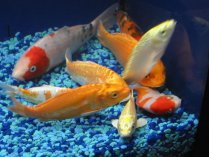 When the fins of your koi are clamped to the sides of the body, what you're describing could be "anything". I would incriminate
water quality first. You may have just cleaned out your koi pond, leading you to believe that your pond water quality must be good, however your pond water quality can still be poor. Most importantly, KNOW your pH and make sure you test for nitrogen accumulation: Ammonia, Nitrite and Nitrate.
If water testing isn't in store for this koi, why bother worrying about it at all? Without knowing the water quality of your pond, your koi is a goner so you might as well flush it. Because all the medicine in the state of Texas will not improve the health of your koi suffering in pond water teeming with Ammonia or a low pH.
If you have your water tested, or you test it yourself, and your pond water quality is quite good, please consider that it could also be a parasitism. If it were a serious parasitism, your koi would have marks on the skin, slime on the skin, or it would be NOT EATING -
How could your koi have a "mild" parasitism? Well, koi aren't all supposed to die from parasites. If they did, the parasites will have defeated themselves by eliminating all their hosts. Natural selection (I don't believe in Evolution) has balanced most fish against their parasites so that the fish can CARRY the parasite and most of the hosts will only be "sick" not dead.
If this is the case, and water quality is quite excellent and the pond is duly spacious, you could consider a mild parasite remedy like salt or perhaps a treatment of Aqua Prazi for flukes.
There is considerable information in this web site about all these elements. Don't get frustrated that I have not expounded on every point, re-writing what I have written over and over again. It's up to you to take the time to use the key words in this message to search out the information abundantly available in this web site.
Koi Fins are rotten (Finrot)
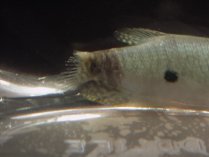 Fin rot is usually a sequel to transport damage to the fins. What happens is that the fish are transported fed, or too densely packed in the bag - the Ammonia builds up in the bag and starts burning the fish. When it comes out of the bag it looks pretty good but the tissues, especially fin and gill tips, are burned-off. So in a day or two, these tissues start to die back and decay, causing what appears to be fin rot. These same circumstances can also occur in your pond. If you are not maintaining perfect water quality, the problems with your water can negatively impact the fins and they can start to appear rotten. It's a rare case where a major water change, and good husbandry (fish care) doesn't straighten out Fin Rot. If you want to treat fin rot, here's what you do:
Test your water.
Do a seventy five percent water change with dechlor.
Minimize crowding.
Feed medicated koi food.
Keep the fish from being too warm, they should be in cool clear water around seventy eight oF or less.
If you really feel like you need to bring more antimicrobials into the picture, Furazone Green works well.
Big veins are in the fins
Internal bacterial infections can cause dilation of the blood vessels in the tail and ffins. Also, high nitrate levels will cause peripheral vasodilation and exaggerated appearance of veins in the tail. Test nitrates at once!
Action Items |
| + Most problems with fins come from water quality troubles so I'd recommend thorough testing for the numbers which matter. |
| + Water changes can't be understimated. Take the pondcrisis test to see if you're doing it right! |
Needed or Recommended Items |
|
| + Water testing Kits | + TERMINATE |
| + Salting | + Dechlor |
| + Aqua Prazi | |